

Sun exposure, freeway driving, and canyon dust make vehicle maintenance different in Southern California. For drivers in Westlake Village and the Conejo Valley, understanding how often to schedule auto detailing helps protect paint, preserve interiors, and reduce long-term wear.
Why Detailing Frequency Matters in Westlake Village
 Unlike colder or wetter climates, vehicles in Westlake Village are exposed to year-round sun, dry air, and airborne dust. Over time, constant UV exposure accelerates paint fading and clear-coat breakdown, while fine dust and debris gradually abrade exterior surfaces during daily driving.
According to Consumer Reports, regular washing and seasonal hand-waxing play a critical role in protecting a vehicle’s finish from environmental contaminants such as tree sap, bird droppings, and road debris—all of which can dull paint and create surface scratches if left untreated.
Because of these conditions, maintaining a consistent auto detailing schedule is not just about appearance. In Southern California, it is a practical investment in long-term paint protection, surface integrity, and vehicle value, helping prevent premature wear caused by the local climate.
General Rule: How Often Most Cars Should Be Detailed
While every vehicle is different, most drivers benefit from routine detailing rather than waiting until damage becomes visible.
In general:
-
Exterior detailing: every 4–6 months
-
Interior detailing: every 6–12 months
These intervals help manage buildup before it bonds permanently to surfaces.
Seasonal Detailing Tips for Southern California
Spring: Remove Environmental Buildup
Spring detailing helps remove:
-
Dust and road film
-
Pollen and environmental fallout
This process refreshes the paint and prepares it for increased sun exposure in the months ahead.
Summer: Protect Against Sun and Heat
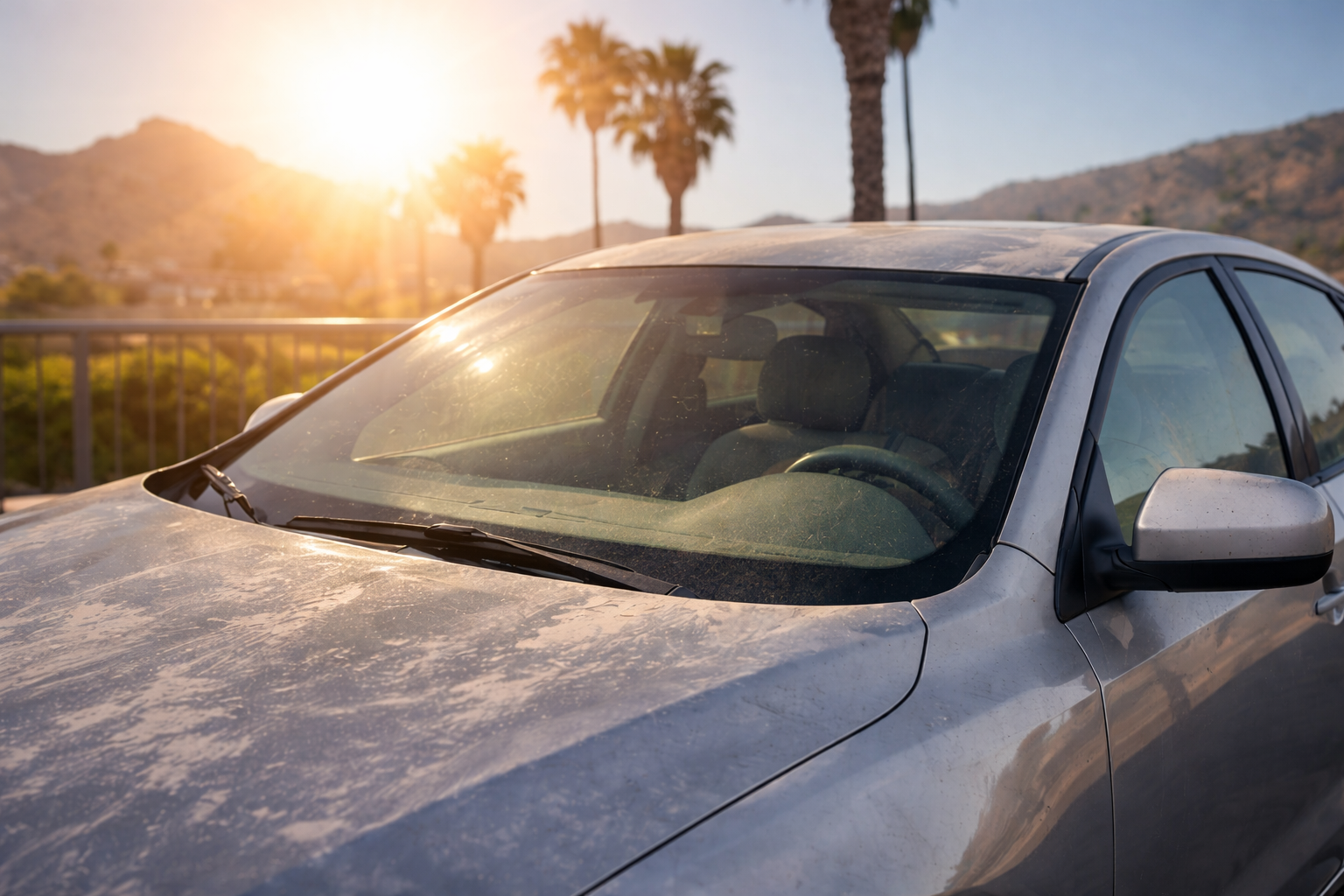 Summer places the greatest strain on vehicle surfaces. Prolonged heat and UV exposure can accelerate paint oxidation and interior material aging.
As a result, summer detailing is often paired with protective services such as ceramic coatings or paint protection film.
Fall: Address Dust and Daily Driving Wear
 As temperatures cool, dust from canyon roads and freeway construction becomes more noticeable. Fall detailing removes embedded contaminants and restores clarity after heavy summer use.
Winter: Maintain, Do Not Neglect
 Even in mild winters, moisture and grime accumulate. While a full detail may not always be required, maintenance-level detailing helps keep protective layers working effectively.
How Driving Habits Affect Detailing Frequency
Beyond seasonal changes, how a vehicle is used also matters.
You may benefit from more frequent detailing if:
-
Your car is parked outdoors
-
You commute daily on the freeway
-
You drive canyon roads often
-
You transport pets or children
What Happens If You Wait Too Long Between Details
Delaying detailing does more than affect appearance. Over time:
-
Contaminants bond more tightly to paint
-
Light scratches become harder to correct
-
Interior stains and odors set permanently
How Bumper2Bumper Helps You Stay on Schedule
At Bumper2Bumper, auto detailing is treated as preventative vehicle care, not just cosmetic cleaning. Our detailing services are tailored to real-world driving conditions throughout Westlake Village, Thousand Oaks, Agoura Hills, Oak Park, and Calabasas.
Whether your vehicle needs:
-
A full interior and exterior reset
-
Seasonal maintenance
-
Interior-focused detailing
-
Preparation for ceramic coating or paint protection film
Our team helps you choose a schedule that fits how your vehicle is actually driven.
What Customers Can Expect
-
Clear guidance on recommended detailing frequency
-
Services matched to seasonal conditions
-
Safe cleaning methods and professional-grade products
-
Consistent results that support long-term value
By maintaining a regular detailing routine, drivers reduce wear and protect both appearance and comfort.
Conclusion
So, how often should you get your car detailed in Westlake Village? For most drivers, exterior detailing every 4–6 months and interior detailing once or twice a year provides reliable protection. However, sun exposure, dust, and daily driving often justify more frequent care.
Choosing Bumper2Bumper means choosing experience, precision, and local expertise. With more than 20 years serving the Conejo Valley, our team understands how Southern California conditions affect vehicles and how to protect them properly.
Contact Bumper2Bumper for expert auto care that keeps your car looking its best — inside and out.