

Window tint is one of the most effective upgrades for improving comfort, reducing heat, and protecting your vehicle’s interior. Because California has some of the strictest tint laws in the country—and because misinformation is common—it is important to understand what is actually legal before installing new film.
This guide explains California’s 2025 tint rules using verified government and legal sources. Whether you are tinting your vehicle for the first time or replacing older film, knowing these standards helps you avoid fix-it tickets and keep your vehicle compliant.
Why California Regulates Window Tint
California’s tint laws come from Vehicle Code §26708, which regulates window obstructions and visibility. The purpose of the law is to ensure:
-
Drivers maintain a clear, unobstructed view of the road
-
Pedestrians, cyclists, and law enforcement can see into vehicles when necessary
-
Tint does not create glare or unsafe reflectivity
During enforcement, officers focus on Visible Light Transmission (VLT)—the amount of visible light that passes through both the glass and the film combined.
Legal Tint Limits in California (2025)
California’s tint limits have not changed for 2025. The same rules continue to apply.
Windshield
Only a non-reflective strip is allowed at the top of the windshield.
Industry summaries often refer to this as the “AS-1 line” or the top few inches, although the law does not use these terms.
Front Side Windows
Front side windows must allow at least 70% VLT (glass + film).
Because most factory glass measures around 75–78% VLT, aftermarket film must be extremely light or nearly clear to remain legal.
Rear Side Windows & Rear Window
California law does not explicitly state that “any darkness” is allowed. Instead, §26708(a)(1) prohibits materials that obstruct the driver’s view.
However, CHP enforcement permits any darkness on rear windows as long as the vehicle has dual side mirrors. Without mirrors, dark tint on the rear window is not allowed.
Reflectivity Restrictions
Tint cannot include reflective or mirror-like materials that reduce a driver’s visibility.
This means mirrored or metallic films are prohibited.
Color Restrictions
Vehicle Code §26708(a)(2) prohibits materials that “reflect a color” or “alter true color recognition.”
CHP and DMV enforcement interpret this to mean no red, blue, or amber tint—colors typically associated with emergency vehicles.
Front side windows must remain effectively colorless.
Medical Tint Exemptions
California does provide exemptions for certain medical conditions, but the rules are narrow. Under Vehicle Code §26708(e):
A driver must have:
-
A signed letter or certificate from a licensed dermatologist or physician explaining the medical necessity.
The material must:
-
Be clear, colorless, and transparent
-
Not reduce driver visibility
Important clarification
The law does not specify a required VLT percentage for medically exempt film.
However, because front windows normally require 70% VLT, drivers should confirm acceptable limits directly with the California DMV or a legal professional before installation.
Did California Tint Laws Change in 2025?
No. California’s tint laws did not change in 2025.
Rumors online suggested Senate Bill 898 introduced new tint regulations, but:
-
SB 898 does not modify tint rules
-
The DMV’s 2025 New Laws list includes no tint-related changes
-
Vehicle Code §26708 remains unchanged
Tint laws are the same in 2025 as in previous years.
Tint Enforcement in California
CHP and local police issue correctable (“fix-it”) citations for:
-
Front windows below 70% VLT
-
Reflective or metallic films
-
Illegal tint colors
-
Rear window tint without dual mirrors
To resolve a fix-it ticket, drivers typically remove the tint, have the vehicle inspected, and pay an administrative fee.
Why Choose a Professional Window Tint Installer
Installing tint in California requires more than selecting a shade. Because state law affects how dark front windows can be and restricts certain film types, a professional installer helps:
-
Assess VLT using industry-standard tools
-
Recommend legal film options based on your vehicle’s factory glass
-
Avoid restricted colors or reflective film types
-
Ensure proper placement based on Vehicle Code §26708
-
Provide cleaner, longer-lasting installation with reduced risk of bubbling or distortion
Professional installation helps reduce the risk of non-compliant tint and ensures a smoother, more durable finish.
Window Tint Installation at Bumper2Bumper
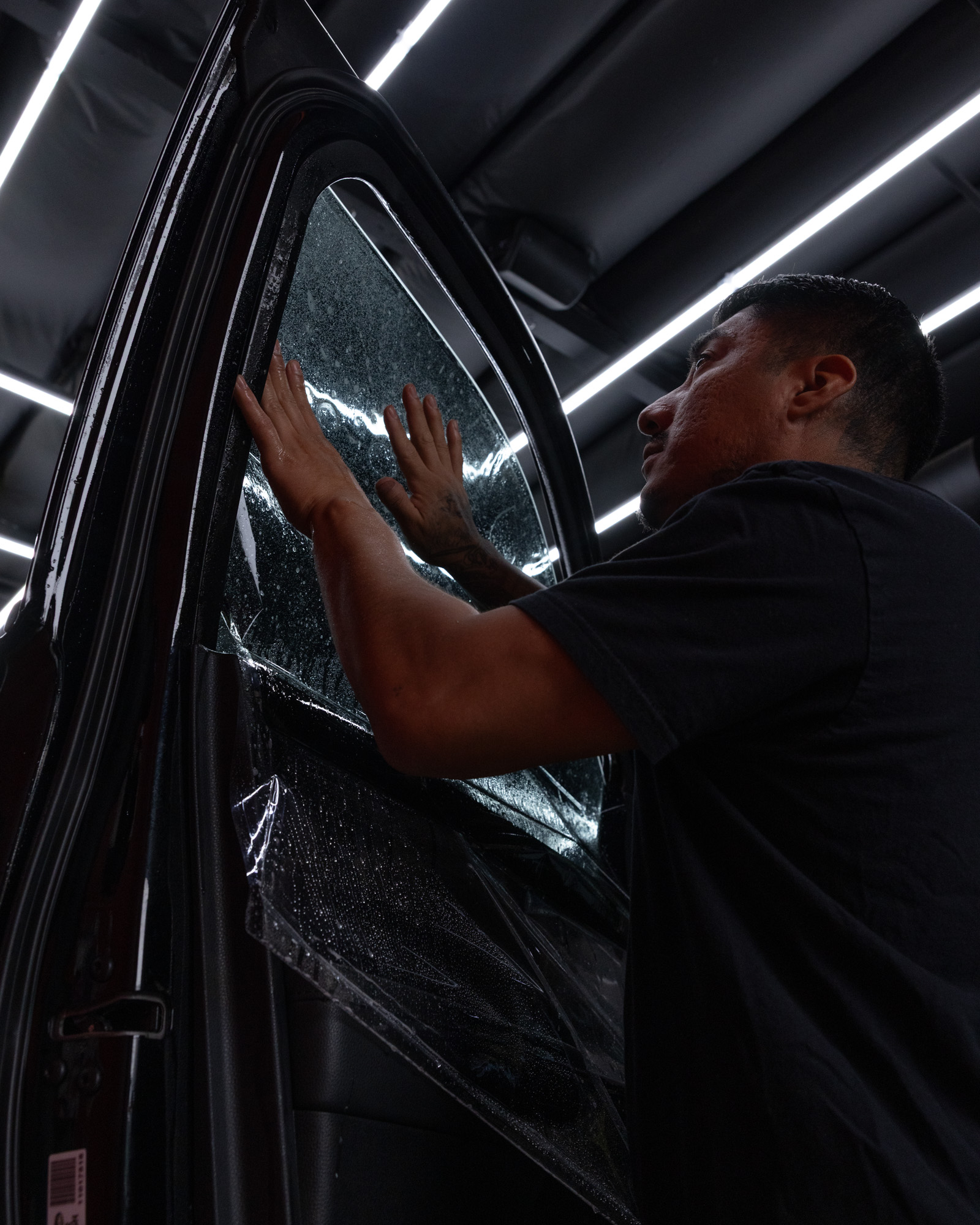
At Bumper2Bumper, our tint installation process is designed around California’s strict regulations and Southern California’s climate. Our focus is on selecting film options that provide protection, comfort, and clarity while aligning with state requirements.
Premium Ceramic Films
We install high-quality ceramic films, including the STEK NEX Series.
According to manufacturer laboratory testing, these films are engineered to:
-
Block up to 99% of UV-A and UV-B rays
-
Reduce interior heat buildup
-
Minimize glare for better visibility
-
Help protect interior materials from fading and cracking
These attributes make ceramic film a strong choice for warm regions like Westlake Village.
Comfort in Southern California Conditions
Ceramic films help keep vehicles cooler in strong sunlight, improving comfort year-round.
Privacy and Interior Protection
Tint adds privacy for passengers while reducing the visibility of valuables inside the vehicle.
Compliance-Focused Process
To help support compliance with California law, we:
-
Use equipment to verify VLT levels
-
Recommend film levels that align with factory glass
-
Select film options designed to meet California’s color and reflectivity restrictions
-
Apply film with attention to clarity and adhesion
A Professional, Clean Finish
Our installation process is designed for long-lasting performance and a uniform, polished appearance.
Conclusion
California’s tint laws are strict but straightforward. Understanding these rules—and choosing an installer familiar with them—ensures your tint looks great, performs well, and stays compliant.
If you are considering tint to improve UV protection, heat reduction, or privacy, Bumper2Bumper provides film options and installation practices designed specifically for California drivers.